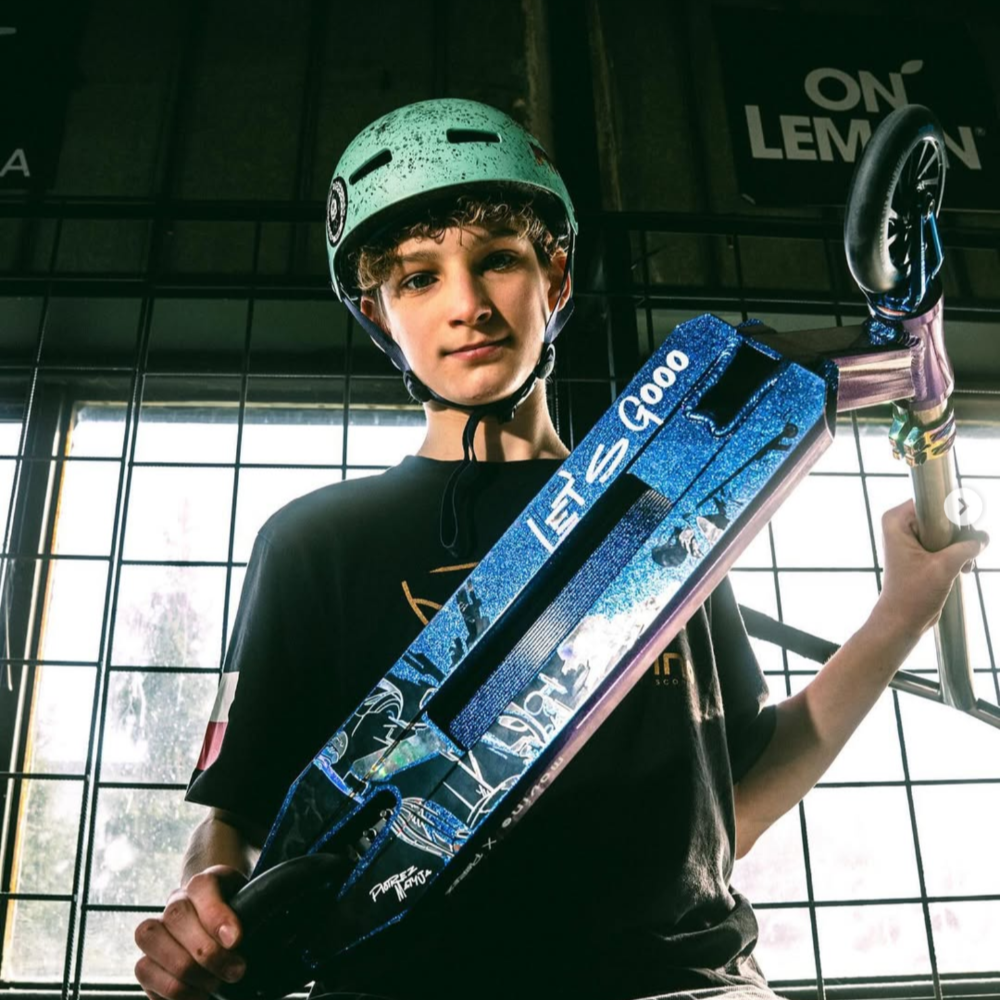
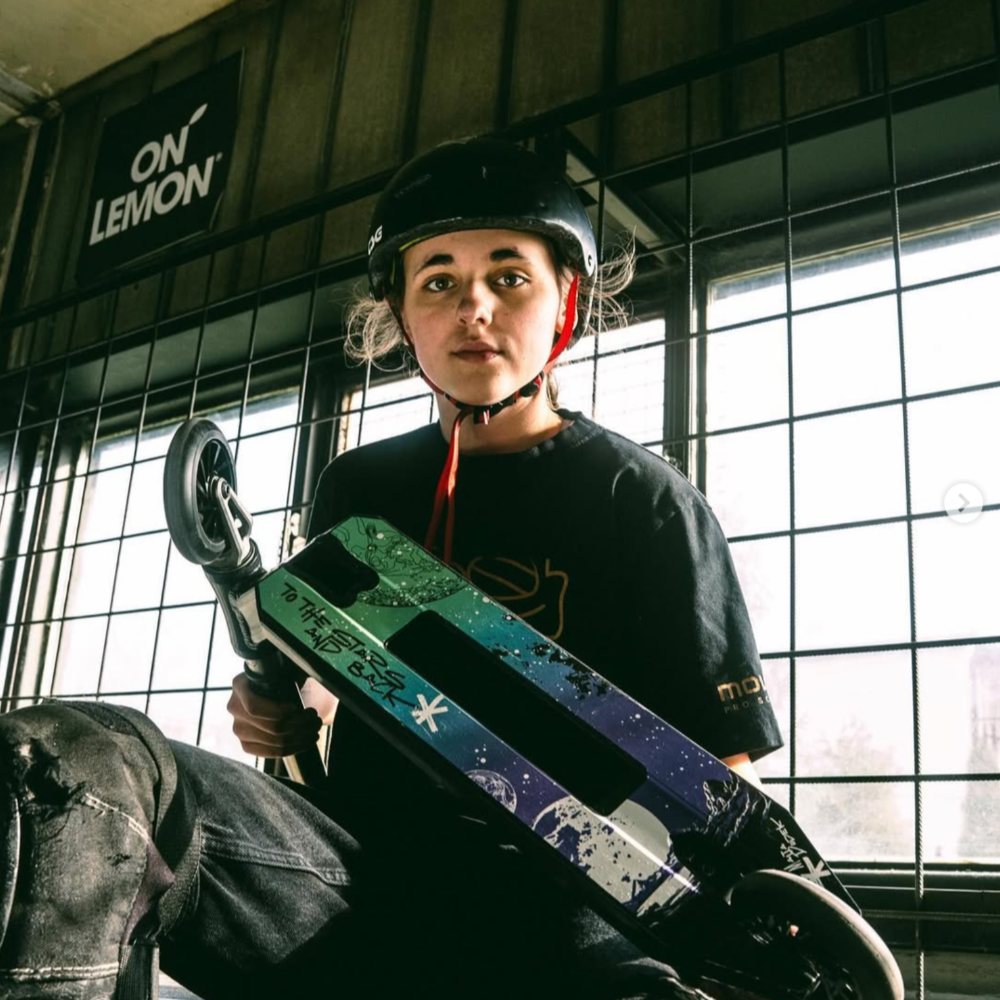
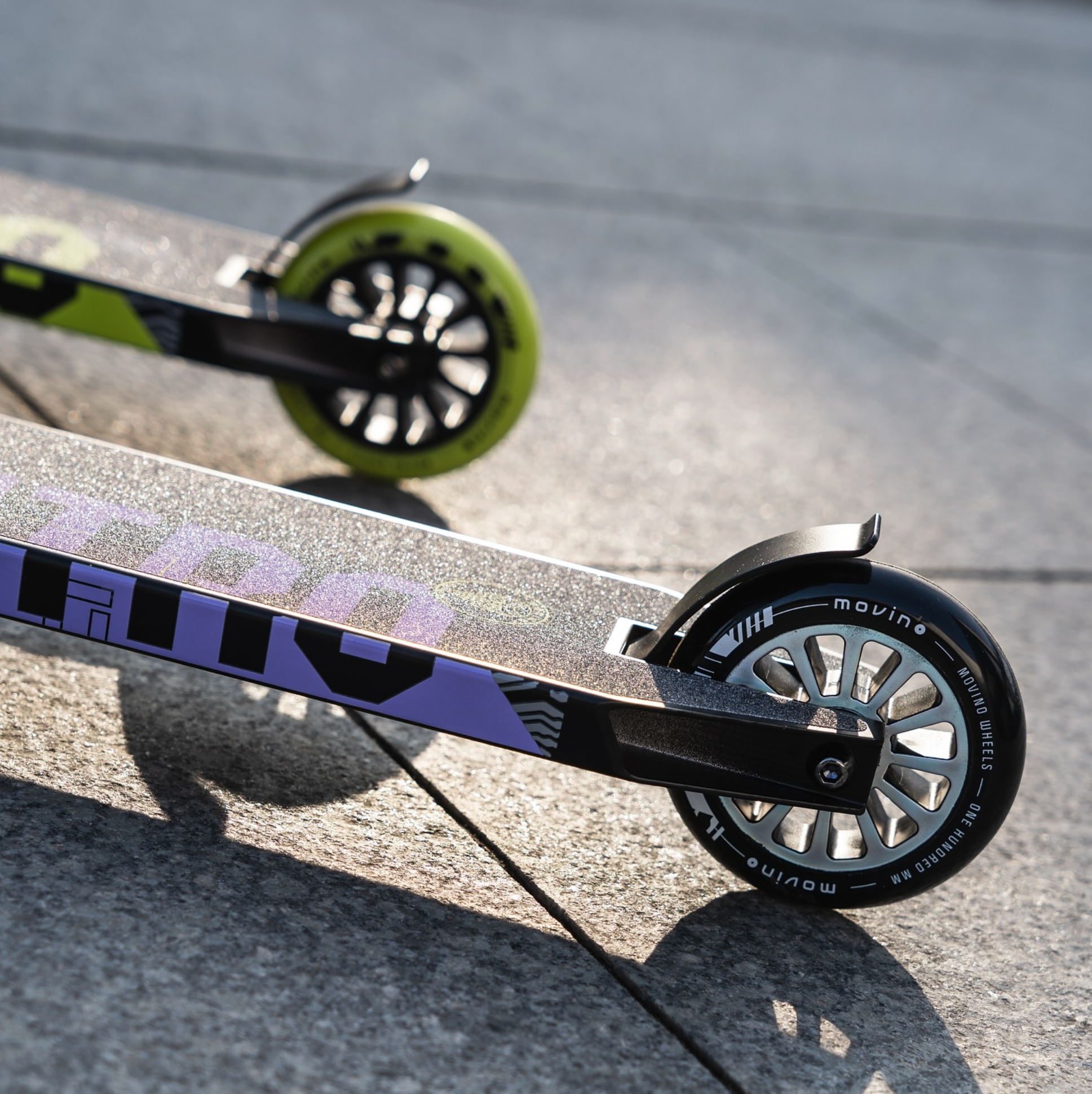
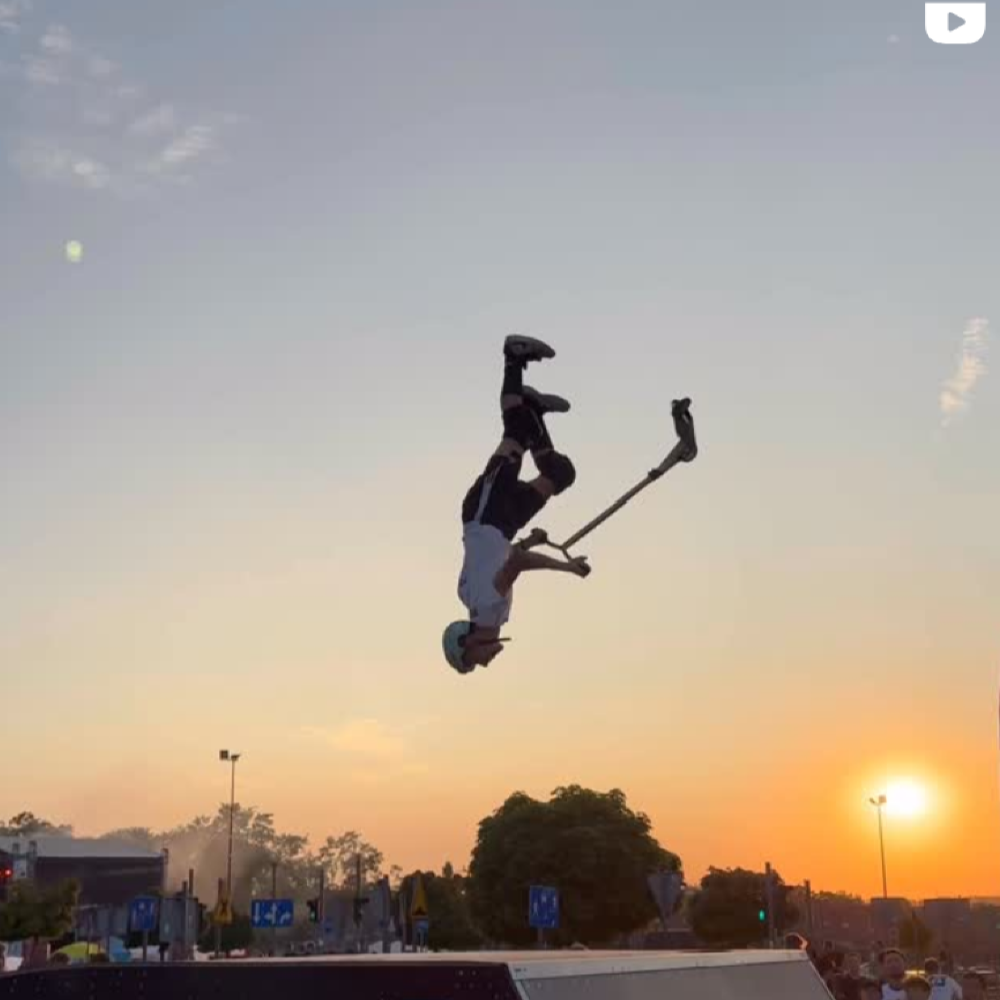
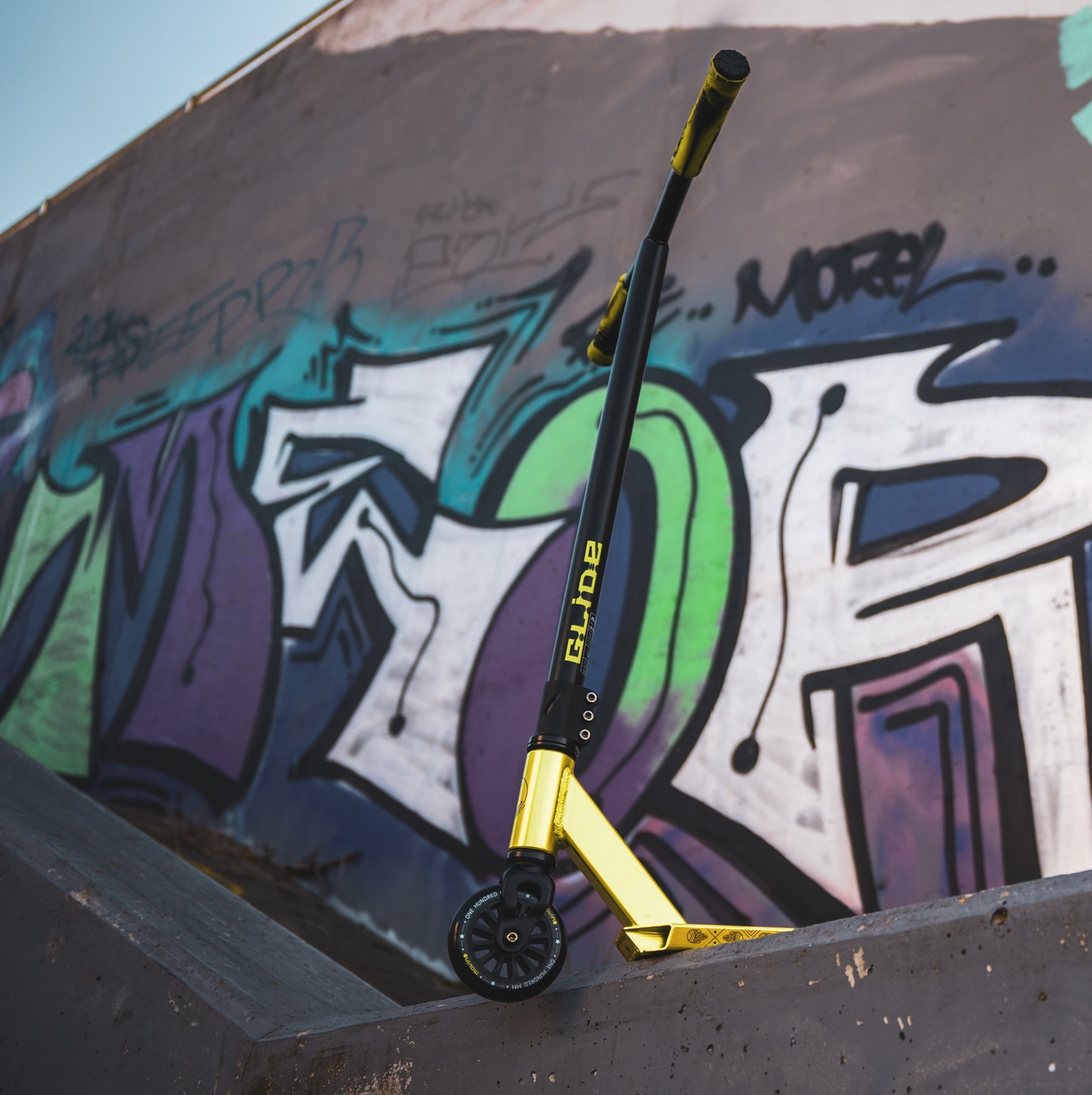
If your goal is to ride ramps, land clean tricks and keep full control in the air, park stunt scooters are the right choice – lighter, faster and built specifically for skatepark riding. At Movino, you’ll find skate park scooters designed to help you progress from your first jumps to more technical tricks, without the setup holding you back.
Park scooter – what makes it the right choice for skatepark riding?
A park scooter is built for one thing: maximum control and precision on smooth skatepark surfaces. That means faster reactions, easier rotations and better handling during aerial tricks. Compared to other setups, a scooter for skate park use focuses on agility, not brute strength.
What defines a proper skate park scooter:
- lighter construction for quicker movement in the air,
- smaller wheels (100–110 mm) for better control and acceleration,
- narrower deck for easier spins and flips,
- Y-bar handlebars designed for aerial tricks.
These features aren’t random. In skateparks, where surfaces are smooth and obstacles are designed for flow, riders rely on precision rather than impact resistance. That’s why park scooters are often 10–20% lighter than street setups, making them more responsive during tricks.
At Movino, every park scooter is designed to give you that feeling of control from the first session. Instead of fighting the setup, you can focus on timing, balance and technique – the things that actually build your skills.
Skate park scooters vs street setups – what’s the real difference?
The difference between skate park scooters and street scooters comes down to how you ride and what you ride on. If you’re spending most of your time on ramps, boxes and rails in a skatepark, the setup needs to support speed, airtime and precision.
Key differences you’ll notice:
- deck size – smaller and lighter in park models,
- wheel diameter – typically 100–110 mm for better maneuverability,
- handlebar shape – Y-bar for easier tricks in the air,
- overall weight – reduced for faster rotations.
Street setups, on the other hand, are built for durability and stability on rough surfaces. That’s why they use larger decks, bigger wheels and heavier construction. But in a skatepark, that extra weight becomes a limitation.
Rider data suggests that using the right type of scooter can improve trick consistency by up to 30%, mainly because the setup supports the type of movement required. In skatepark riding, where timing and precision matter, that difference is immediately noticeable.
If your focus is airtime, spins and technical tricks, a dedicated skate park scooter simply makes more sense. And that’s exactly what you’ll find in the Movino range.
What makes the best scooters for skate park – key features you should know
The best scooters for skate park riding combine low weight, high responsiveness and reliable grip. Every component plays a role in how the scooter behaves during tricks, so understanding the basics helps you choose the right setup.
Key elements that define performance:
- deck design (peg-cut) – allows for peg installation and reduces weight,
- griptape surface – improves foot stability during tricks,
- wheel hardness (82–88A) – balance between grip and durability,
- wheel core construction – solid cores for strength, lighter designs for agility,
- bearings (ABEC scale) – smoother and faster rolling.
Wheels are especially important. Smaller wheels make it easier to control the scooter mid-air, while their hardness affects how they interact with the surface. Softer wheels provide more grip but wear faster, while harder ones last longer and allow higher speeds.
It’s also worth noting that lighter scooters require more control from the rider, especially at the beginning. But once you get used to them, they allow for faster progression and more precise tricks. That’s why most advanced riders prefer lighter setups designed specifically for skatepark use.
At Movino, we focus on creating scooters for skate park riding that strike the right balance. You get control when you need it, speed when you push harder, and stability when it matters most – all in one setup.
Wheels in skate park scooters – size, hardness and control explained
In a skate park scooter, wheels are one of the most important elements because they directly affect speed, grip and how precisely you can control every movement. If you’re riding ramps, transitions and boxes, the wrong wheels will slow you down immediately – even if the rest of the setup is solid.
Here’s what really matters when choosing wheels in scooters for skate park:
- diameter: 100–110 mm – smaller wheels = faster acceleration and better control,
- hardness: usually 82–88A – balance between grip and durability,
- core type – solid cores are more durable, hollow ones are lighter,
- material: polyurethane (PU) – ensures grip and high resistance to wear.
Smaller wheels make a noticeable difference. They allow for quicker reactions, tighter turns and more precise positioning in the air, which is essential when working on tricks like spins or flips. That’s why most skate park scooters stay within the 100–110 mm range – it’s the sweet spot between speed and control.
Hardness also plays a role. Softer wheels give you more grip, which helps at the beginning, but they wear down faster. Harder wheels last longer and allow higher speeds, which is why more advanced riders often prefer them. In practice, even a small change in hardness can affect how the scooter feels during landing.
Then there’s the core. Wheels with a full aluminum core are the most durable, while spoked or hollow designs reduce weight. It’s always a trade-off – but in a well-balanced park scooter, these elements are selected to work together.
We use components that match the purpose of skate park riding. You’re not just getting wheels – you’re getting a setup tuned for control, speed and consistency on ramps.
How to choose a scooter for skate park – based on your level and style
Choosing the right scooter for skate park riding comes down to one thing: how advanced you are and what kind of tricks you want to do. A beginner needs a completely different setup than someone already landing technical combinations.
Start with the basics:
- height of the rider – bars should reach around waist level,
- experience level – lighter setups are harder to control at first,
- riding style – more technical vs more flow-based riding.
For beginners, the best choice is usually a lighter, more compact park scooter, which makes it easier to learn balance and basic tricks. Smaller decks and lower bars help you stay in control, especially during your first jumps.
More advanced riders often look for something else. They prefer setups that are:
- even lighter for faster rotations,
- more responsive during complex tricks,
- built with higher-end components (e.g. ABEC-9 bearings).
Data from rider progression studies suggests that properly matched scooters can speed up learning by up to 30–40%, especially in the first months of riding. That’s because you’re not compensating for the equipment – you’re building technique instead.
We keep the selection clear. Whether you’re choosing your first park scooter or upgrading to one of the best scooters for skate park riding, you’ll find models that match your level without forcing you to overthink every detail.
Movino skate park scooters – quality, design and ready-to-ride performance
When you choose Movino skate park scooters, you’re choosing equipment that’s been designed, tested and refined for real use. Every model goes through quality control processes and meets safety standards, so you can focus on riding instead of worrying about durability.
What you get with Movino scooters for skate park:
- tested construction – verified durability and safety,
- high-quality components – compression systems, bearings, materials,
- distinct design – unique colors and finishes,
- balanced setups – ready for immediate use.
We don’t treat design as an afterthought. A good scooter should perform well, but it should also look right. That’s why Movino models combine technical performance with recognizable style, something riders actually care about.
At the same time, reliability stays the priority. Every component – from the deck to the wheels – is selected to handle regular skatepark use. It’s not about extreme specs, but about consistency over time, session after session.
And if you’re building your full setup, it’s worth remembering the basics:
- helmet and protective gear increase safety significantly,
- proper equipment reduces the risk of injury, especially during learning.
Choosing a skate park scooter is not just about buying equipment. It’s about starting (or continuing) your progression with a setup that supports you from the first ride. And that’s exactly what you get with Movino.